Tuesday, April 29, 2014

Can Religion Keep Us From Our Journey?


Over the years I’ve come to appreciate that “spiritual development” has less and less to do with religion. And while the Church, the Bible and the liturgy are important to our development, spiritual formation is more about learning to discern the call of God “outside,” in our everyday lives. Spiritual Formation is an ongoing dynamic process in which we develop the “tools” to be able to see and align ourselves with people, places and things in which God is at work. I know this might sound like heresy but in some ways religion can become a static process that lulls us to sleep in its repetitive sameness. As such, it can become an “obstacle” to our call to “bear witness” to God’s Word to those outside the upper room. In a real sense we are preaching to the choir! We in the comfort and security of our Church community, are like the apostles in the upper room after the Crucifixion. When Jesus appeared to the apostles and Thomas he said “... As the Father has sent me, so I send you," he beckons us as he did his disciples to leave the upper room and live our lives outside the walls of our Church as we engage in Christian practices that are fundamental to human needs, and may have nothing to do with religion but everything to do with faith. As such, we join with one another, and with Jesus, and with the communion of saints across time and space in a way of life that proclaims Christ’s victory over death and our eternal life. (Luke 24:13-35)

Now in “bearing witness” to the Word, I'm not talking about "life-style evangelism." That term for many of us, may evoke discomfort and have a strange connotation. We bear witness to the great movies or television programs we've seen and want others to enjoy. We bear witness to the accomplishments (or failures) of our sports teams. We bear witness to the important events in our family or work lives. We bear witness -- that is, tell someone about -- the things that matter to us all the time. We bear witness to feelings of joy, sadness and despair. We share life, our lives, with each other. No, I mean we bear witness to the presence of God, the Love, in all things in the here and now all the time.

Witnessing is not really all that different when it comes to faith. It does not mean shoving our beliefs down someone's throat or threatening them with eternal hellfire if they don't believe as we do. The ego tries to convince, while love shares.  To witness is simply communicating with others where we sense God’s presence -- at home or work, at church or school, or in a stranger or a friend, a doctor or teacher or neighbor, or even in a tragedy. Bearing witness is nothing more than proclaiming God’s presence in our life and  in our behavior as the Word becomes flesh in us and those we encounter as we live his Word…  by Him and with Him and in Him in the unity of the Holy Spirit.


Tuesday, April 22, 2014

Our Great Confession: My Lord and My God


While we might not say this out loud, most of us often regard Bible stories as we would history. Of course in some ways they are but they are so much more; yet, it’s not always easy to see them as connecting to our real lives in a tangible way. Let’s face it, the stories are just odd enough, just unusual enough, and just foreign enough to our day-to-day experience that we don’t pretend to understand them let alone feel confident at connecting them to our daily lives. Moreover, because we have read these familiar accounts year in and year out, we tend to see them in the same way. It’s not that we’re unwilling to take a fresh look but our preconceived impressions, influenced by so many who have interpreted their meanings for us, direct us to view them through a familiar prism.

OK, so once again it’s time to read the story of “Doubting Thomas” (John 20:19-31). I suppose it might be helpful to keep in mind that the Gospel writers themselves did not think that they were telling stories about events that happened in the past. Rather, they were reporting to new audiences what they believed were current revolutionary events and claims that they knew would shape the immediate present and future of everyone who read or heard them. So while John could have shared many other stories about Jesus to make his point, he chose this particular story because he hoped that everyone who heard it would know that Jesus is the messiah, the savior of the world.

John, as he did then, is inviting us into the scene involving Jesus’ encounter with Thomas at this very moment, here, now and today…to make this our story. So, as you re-read the all-to-familiar Gospel, I invite you to walk away from it and let it marinate. If you choose to come back, where do you see yourself in the scene? Near the end of this story, immediately after Jesus has shown his wounds to Thomas, and Thomas, in turn, professes the great confession of John’s Gospel, My Lord and My God, Jesus says, “Have you believed because you have seen me? Blessed are those who have not seen and yet have come to believe.”

I admit; I saw myself as Thomas. And sadly, for most of my life I had assumed that Jesus was rebuking Thomas, which frankly always struck me as a little harsh, since Thomas only asked for what everyone else had seen and received. (I can still hear my father saying, don’t ask why, just do it.) However, a few short years ago, in preparing for Bible Study, it occurred to me that this might be another one of those lessons that invite us to realize that we are already standing smack dab in the middle of the encounter. I mean, think about it: who are those who have believed without seeing Jesus? Well, likely some were the members of John’s community for whom he wrote. But guess what – we’re included in that group, too. We, also, have believed and struggle to continue believing without ever seeing with our eyes, or touching with our hands. And so now I think it’s not so much that Jesus is rebuking Thomas as he is blessing us. What a relief it was to realize that Jesus was not only cutting me some slack for being a “doubter” too, but was assuring me that this never-ending encounter with him continues every day of our lives and, will until the end of time. We are all characters in John 20:19-31, and are invited to learn from the faith and fear, courage and mistakes of those mere mortals who have come before. But now we are the ones who are invited to share Thomas’ confession as part of God’s plan as we proclaim My Lord and My God.

Thursday, April 17, 2014

Abide in Me as I in you...As the Father has loved me, so have I loved you, abide in my love


When we meditate on the meaning of Easter, we are reminded that the incarnation of the divine in Jesus Christ became more than just a role model for teaching us how to live, and became more than our intercessor for the Father. We are reminded that when the Word became flesh and dwelt among us, we share our spiritual and human DNA with Jesus…by him, and with him and in him, in the unity of the Holy Spirit, and we become one with the Father and the Son.  

In what better way could God express his unconditional love for us than by sharing his Spirit incarnated in Jesus and in us? Easter reminds us that Jesus’ resurrection is not a miracle. God can work miracles without us. No, For Easter to matter, it requires us to join Jesus in his suffering, death, and resurrection during this Holy Week… and all the holy weeks of our lives.


Tuesday, April 15, 2014

Why Easter Matters


Easter should be considered a "sacramental" event rather than a miracle. The proclamation of a miracle excuses us from having anything to do with it.  A miracle is God’s doing.  But a sacrament, however, requires us for its existence.  God performs miracles but men celebrate sacraments in union with him.  God may work a miracle even without our faith and he may work it apart from men.  Man, however, is essential to the presence of a sacrament. 
If Easter is to be a sacramental event, we must celebrate it with our lives.  Easter is sacramental every time one of us makes his life a source of light for his fellow man.  Easter is sacramental when our words heal, when our hearts understand, when lesser values die in us for the sake of greater realities. And the Word Became Flesh and Dwelt Among Us. Jesus became incarnate to not only teach us how to live our lives but for us to reside in Him. When the priest says “in him through him and with him,” he’s reminding us of our participation in his birth, death and resurrection.

We are sacramental with Easter when men know us to be faithful to each other.  We are sacramental with Easter when our fellow men see us suffer not for selfish advantage but for their redemption.  Easter is never more sacramental than when one man gives his life on behalf of another.
Christians seek to make Easter sacramental in their lives by their memory of Jesus.  When Jesus is remembered, he has not died or risen alone. We are untied with him as we experience our Good Fridays and as we celebrate our resurrections. Jesus is an Easter-maker. John 20:1-18 or Matthew 28:1-10


Tuesday, April 8, 2014

"Father, if it is possible, let this cup pass from me; yet not what I want but what you want"


He Suffered Under Pontius Pilate…

Daily experience shows us how difficult it is to stand up for those spiritual values to which we are committed even when we are at our best. Whenever we have to swim against the current or buck the trend we can relate to why Jesus suffered under Pontius Pilate. St Paul reminds us that “Indeed, all who wish to live God-centered lives in Jesus Christ will suffer persecution.” (2 Titus 3:12)

Gandhi, Martin Luther King Jr., Rosa Parks, among others were punished and in some cases killed for standing up for their values.

For us no less than Jesus, history is the stage on which our spiritual convictions are put to the test. Jesus was executed by a domination system that is as powerful today as it was then. How do we in our everyday lives follow Jesus as we too stand up for our spiritual values and in our own way “suffer under Pontius Pilate?”

He Was Crucified…

 Jesus’ crucifixion is a matter of historical fact. He like so many “prophets” who represented threats as subversive to Jewish law and Roman authority, were subjected to murder by crucifixion.  Crucifixion was the corporal punishment of choice for political radicals, designed to kill the convicted and to send a powerful message to any followers, that his “reign” was ended. 

What then might be the spiritual implication of Jesus’ crucifixion for us? Perhaps this question is best found in our Creed, which professes that our faith in the incarnate, Jesus Christ, is one and the same with God. Our belief in Jesus who, in his humanity fully shared in God’s divine spirit, united us in Him through Him with Him.  Thus when we profess that God’s tangible presence in the world was crucified, we express our faith that we can encounter God in the most horrible circumstances. In the midst of crucifixion—a scene that seems to scream out God’s absence…God is present. There is never anything so terrible in life or death that prevents us from enduring it with the trust in God’s presence. There is no injustice, no pain, no catastrophe that prevents us from God’s enduring love. This has given to countless men and women of faith a sense of peace and comfort in the midst of their darkest hours. (Matthew 26:14-27:66)
(Adapted from Deeper than Words, Living the Apostles Creed, David Stendl-Rast).

Tuesday, April 1, 2014

...Jesus Wept


As I read the Gospel appointed for this upcoming Sunday, I happened to recall a news story from Sunday night. I called out to my wife, asking if she remembered the name of the young girl who died of cancer. The story got my attention and had a lasting effect. My wife answered, “Gabriella Miller,” and wondered what prompted my need to know. I said, “I don’t know, but something I read this morning reminded me of that young girl.” That something I read was John’s (John 11:1-45) account of the story of Lazarus. Is there any more familiar story to Christians than that of Jesus raising Lazarus from the dead? In fact, the story is so well-known that “Lazarus” has become a well-known metaphor for revival and resurrection beyond the realm of religion.

So why did I connect the Lazarus story to this child, who died last fall at the age of 10? Gabriella was diagnosed with brain cancer in November of 2012 but rather than retreat to her illness and the discomfort of all the interventions designed to reverse or halt her condition, she never lost hope. Instead, she dedicated her young, fragile life to raising awareness for cancer in children who like her, are suffering and who unlike her, have no voice and quietly retreat to waiting. She became a force for action, raising funds to support research and seeing to the “comfort” and wishes of terminally ill youngsters. To that end she raised millions of dollars and vicariously saw to the aid and comfort of hundreds of afflicted children.

The story of Lazarus shares much in common with the woman at the well and the blind man. The faith of Martha and Mary and the Samaritan woman’s belief that Jesus was the Messiah, instilled a spark of faith in all those around them. They stepped out of their comfort zones despite the risk of being criticized if not condemned.

 In many ways Gabriella is like the woman at the well. She defied her illness as the Samaritan defied convention. Gabriella did not step back in a silence, reserved for the terminally ill, and was not willing to submit to her illness as she called for action… as we stand by wringing our hands in sympathy…and go on about our lives. No, the story of Lazarus doesn’t lead us to believe that God would save Gabriella from death, or raise her from the dead; after all, even Lazarus would eventually succumb to physical death. But the story makes us realize that God through Gabriella resurrects us and brings our faith to life as we see the love of God through the eyes of this 10 year old child.

Tuesday, March 25, 2014

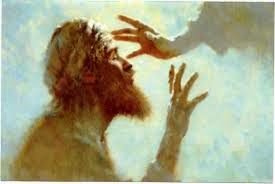
Seeing is Believing


Spring is nearly one week old, but we’re not convinced are we? Temperatures are still hovering in the winter range and although we’ve appeared to dodge a “nor’easter,” today’s forecast calls for light snow. Yet, somehow the world around us knows what we don’t see, or perhaps refuse to see. There is more light as daylight lengthens; the lawn, despite the cold, shows some signs of green in response to the light. The birds have once again begun to sing; they know the light, and ignore the cold. Yet I, layered in warm clothing, watch out my window as the woodpecker drills holes in my Atlas cedar, and mines the rising sap. He knows what the light reveals. And what about the crocus struggling under remnants of not-yet-melted snow, making its presence felt in response to the light. It knows despite its icy blanket. Yet I question and wonder, can it really be spring?

In our Gospel (John 9:1-41), John presents Jesus as the light in the darkness, calling forth life. And as witnessed by the world outside my window, all life springs from the light as it lengthens in the world. In this ambivalent month: warm one day, cold another, the light warms the soil and calls the seeds to come to life. March knows instinctively what we find hard to believe.

We can deny the season but we cannot deny the light’s return. Seeing is believing…right? In our Gospel, Jesus restores a blind man’s sight. Yet, the Pharisees are unwilling to accept what they see, ask a barrage of questions: can he really see; is this the same man; ask his parents if he was born blind; how did Jesus open his eyes. What more can the man say; he was blind, Jesus gave him sight and now he can see. Still not wanting to believe what they have seen and heard, the Pharisees drive the man away…out of their sight.

Perhaps the unwillingness to believe in the obvious may seem an exaggeration by John to make a point, but is it? Sometimes, despite what we see and hear, we find it difficult to let go of what we think we know. The inability to let go and put our egos aside is part of our human condition. It can be argued that believing and understanding are the Provence of the intellect, while knowing is an intuitive part of our being. We know air, we don’t believe in it. So, what does it take for his light to penetrate and our hearts to open and to just let go without question? Isn’t it curious how all of nature knows the light and responds without question, and we can’t let go of winter and open our eyes to the light?

And the river bank talks of the waters of March
It's the promise of life, it's the joy in your heart

And the river bank talks of the waters of March
It's the end of all strain, it's the joy in your heart

http://www.youtube.com/watch?v=6MNknFy2gdQ

Tuesday, March 18, 2014

How is it that you ask a drink of me a woman of Samaria?


Last week we were introduced to Nicodemus who comes to Jesus by night. This week in John 4:5-42 we encounter the Samaritan woman who Jesus meets at noon at the well. The contrast between Nicodemus and the Samaritan woman is striking: Nicodemus is a Pharisee, an insider, an acknowledged Jewish leader. He is a man, he has a name, but he comes to Jesus by night. The character to whom we are introduced in this week's text is a Samaritan, a religious and political outsider. She is a woman; is not given a name, but she meets Jesus in full daylight. As if their encounters were not strange enough, the contrast between Nicodemus’ and the Samaritan woman’s conversations with Jesus were even more extraordinary. Whereas Nicodemus is unable to move beyond the confines of his religious convention, the Samaritan moves outside of her religious experiences and engages Jesus in an in-depth dialogue. As such she has no trouble reminding Jesus of what separates them -- he a Jew and she a Samaritan -- and of what connects them -- their ancestor Jacob, at whose well they meet.  While Nicodemus cannot understand that Jesus is sent by God, Jesus tells the woman at the well who he is as he reveals to her his “name,” I am he… How is it that this woman who meets Jesus briefly, dares to “wonder out loud” if he is the Messiah, while the apostles, still not quite convinced, continue to safely address him as teacher, “rabbi?”

The striking disparity between Nicodemus and the woman at the well underscores Jesus’ love for what society characterizes as the outsiders. The Samaritan woman at the well immediately recognizes the societal barriers and boundaries that keep her in her place but yet she is willing to challenge Jesus' authority over their ancestors of the faith. She is not certain that Jesus is the Christ but she does not let that stop her from leaving behind her water jar, going into the city, and inviting the people to their own encounter with Jesus: "Come and see a man who told me everything I have ever done! He cannot be the Messiah, can he?" They left the city and were on their way to him.”

The woman at the well shows us that faith is about an ongoing dialogue; about growth and change. It is not about having all the answers. If we think we have all the answers, if we are content with our faith just the way it is and are comfortable with our tried and true convictions, we may miss the opportunity to grow and be transformed and will lack the confidence to be able to ask others to "come and see."

Another issue, perhaps for another discussion and another time, has to do with organized religions’ pronouncements on women and sexuality. At no time does Jesus condemn or judge her as society and organized religions have. Where did these rules come from? Shouldn’t we finally rise above phony moralism and misplaced misogyny that has characterized so much of Judeo-Christian theology? This is really a story about the transforming power of love and not about a story about a woman who like us is no less human. After all, Jesus received the Cup from this “scandalous” woman, and she shares it with us in her joy at being loved.

Tuesday, March 11, 2014

The Wind Blows Where it Chooses...


... and you hear the sound of it, but you do not know where it comes from or where it goes. 
–Jesus, speaking to Nicodemus John 3:1-17

I’m not sure we give Nicodemus enough credit. So much is made of his meeting Jesus in the dark of night, hidden from the crowds and his own people. Yet, everything about his demeanor suggests that he was not afraid to be seen with Jesus. Even more, his willingness to engage Jesus with questions shows that he held him in high regard and was sincerely interested in learning more about Jesus and his teachings.  

Nicodemus presses Jesus and even respectfully debates him:   “How can anyone be born after having grown old?” he asks.  “Can one enter a second time in the mother’s womb and be born?” Now, here again, while Nicodemus is smart enough to realize that Jesus is speaking metaphorically, he wants to know what Jesus means. Are we not all products of the lives we have lived?  Are we not shaped by our repeated experiences, are we not formed by our educations and our works? Can all of this be swept aside by the “blowing of the wind?”  Can we become un-formed, in order to be re-formed by the Spirit of God? All of these are reasonable questions that we might ask if we were Nicodemus.

Jesus says we must be born of the Spirit who will bear us, when we are born again into the realm of God.  So it’s reasonable to assume that there is some pain involved in our transformation. How much of the old do we take with us when we are born again? And, if we are born of the Spirit, don’t we get the sense that we do not escort ourselves into God’s realm on our own? It’s reasonable to assume that we are unable to “bear” ourselves in rebirth. We cannot do it on our own.  There must be another force at work, another force entirely. Only the Spirit can usher us from this world of fixed realities to God’s realm of new possibilities.

 Of course Nicodemus is right: we cannot ever go back and enter our mother’s wombs a second time.  Our mothers cannot be prevailed upon to bear us twice—although my mother often said she wished she could; I might get it right the second time! So how do we begin our “gestation” and re-birthing process? If we bear some of the responsibility of our renewal, what part do we play?

Perhaps John Wesley’s answer in his sermon on the subject says it all: It is the change wrought in the whole soul by the almighty Spirit of God when it is "created anew in Christ Jesus"; when it is "renewed after the image of God, in righteousness and true holiness"; when the love of the world is changed into the love of God; pride into humility; passion into meekness; hatred, envy, malice, into a sincere, tender, love for all mankind. In a word, it is that change whereby the earthly, sensual, devilish mind is turned into the "mind which was in Christ Jesus." This is the nature of the new birth: "So is every one that is born of the Spirit." (http://new.gbgm-umc.org/umhistory/wesley/sermons/45/)

Tuesday, March 4, 2014

The Hidden Persuaders


In 1957 Vance Packard wrote what was to become a definitive treatise on the evolution of modern advertising entitled The Hidden Persuaders. It was the early years of television and highly trained ad men were using applied psychology and sociology to tap into the consumer’s purchasing behavior as more and more goods were coming to market. While at one time advertisements focused on a product’s benefits; today, however, less is said about the quality of a product as more is implied about how a particular product can change a lifestyle and lead to greater happiness. On the face of it, such advertising sounds ludicrous -- how can owning a particular product enhance our sense of self-worth? Yet the book suggests that we are so starved for a sense of meaning and purpose that we make many of our purchasing decisions based on the hope that the story the ad men tell us is true and that we will be happier, fulfilled and feel better about ourselves if we simply buy their product being promoted. Now, it's not that the goods that are being sold are bad, but rather that too much is expected from them. In the final analysis a car is just a car and a pair of running shoes are just shoes. These things are not likely to change our lives.

Which brings us to our gospel reading Matthew 4:1-11. Perhaps the primary message here is that Jesus shows us the key to finding our true identity and the ability to resist temptation is possible when we are in a “right” relationship with God. Attachments and possessions are all external temptations and distractions that can get in the way. At birth, God confers upon us our essential identity as his beloved children and, unlike Adam and Eve, we hope to avoid  succumbing to the various external pressures that seek to define our worth with fleeting earthly possessions.
Yet, as with Jesus, it's important to recognize that temptation is not a onetime thing. While Jesus rejects the tempter in the desert, he does have other moments of doubt, particularly in the garden at Gethsemane and on the cross. As with Jesus, our life as Christians does not eliminate feelings of doubt, or desire, or a sense of feeling incomplete. These are all a part of our human condition. Yet, as heirs of Adam and Eve, and like Peter, we will inevitably fall short and need to be picked up time and again, knowing that in and through the crucified and risen Jesus we have the promise of forgiveness and new life.