Tuesday, March 25, 2014

Seeing is Believing


Spring is nearly one week old, but we’re not convinced are we? Temperatures are still hovering in the winter range and although we’ve appeared to dodge a “nor’easter,” today’s forecast calls for light snow. Yet, somehow the world around us knows what we don’t see, or perhaps refuse to see. There is more light as daylight lengthens; the lawn, despite the cold, shows some signs of green in response to the light. The birds have once again begun to sing; they know the light, and ignore the cold. Yet I, layered in warm clothing, watch out my window as the woodpecker drills holes in my Atlas cedar, and mines the rising sap. He knows what the light reveals. And what about the crocus struggling under remnants of not-yet-melted snow, making its presence felt in response to the light. It knows despite its icy blanket. Yet I question and wonder, can it really be spring?

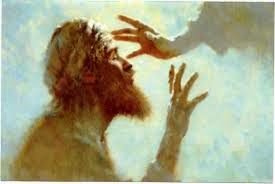
In our Gospel (John 9:1-41), John presents Jesus as the light in the darkness, calling forth life. And as witnessed by the world outside my window, all life springs from the light as it lengthens in the world. In this ambivalent month: warm one day, cold another, the light warms the soil and calls the seeds to come to life. March knows instinctively what we find hard to believe.

We can deny the season but we cannot deny the light’s return. Seeing is believing…right? In our Gospel, Jesus restores a blind man’s sight. Yet, the Pharisees are unwilling to accept what they see, ask a barrage of questions: can he really see; is this the same man; ask his parents if he was born blind; how did Jesus open his eyes. What more can the man say; he was blind, Jesus gave him sight and now he can see. Still not wanting to believe what they have seen and heard, the Pharisees drive the man away…out of their sight.

Perhaps the unwillingness to believe in the obvious may seem an exaggeration by John to make a point, but is it? Sometimes, despite what we see and hear, we find it difficult to let go of what we think we know. The inability to let go and put our egos aside is part of our human condition. It can be argued that believing and understanding are the Provence of the intellect, while knowing is an intuitive part of our being. We know air, we don’t believe in it. So, what does it take for his light to penetrate and our hearts to open and to just let go without question? Isn’t it curious how all of nature knows the light and responds without question, and we can’t let go of winter and open our eyes to the light?

And the river bank talks of the waters of March
It's the promise of life, it's the joy in your heart

And the river bank talks of the waters of March
It's the end of all strain, it's the joy in your heart

http://www.youtube.com/watch?v=6MNknFy2gdQ

Tuesday, March 18, 2014

How is it that you ask a drink of me a woman of Samaria?


Last week we were introduced to Nicodemus who comes to Jesus by night. This week in John 4:5-42 we encounter the Samaritan woman who Jesus meets at noon at the well. The contrast between Nicodemus and the Samaritan woman is striking: Nicodemus is a Pharisee, an insider, an acknowledged Jewish leader. He is a man, he has a name, but he comes to Jesus by night. The character to whom we are introduced in this week's text is a Samaritan, a religious and political outsider. She is a woman; is not given a name, but she meets Jesus in full daylight. As if their encounters were not strange enough, the contrast between Nicodemus’ and the Samaritan woman’s conversations with Jesus were even more extraordinary. Whereas Nicodemus is unable to move beyond the confines of his religious convention, the Samaritan moves outside of her religious experiences and engages Jesus in an in-depth dialogue. As such she has no trouble reminding Jesus of what separates them -- he a Jew and she a Samaritan -- and of what connects them -- their ancestor Jacob, at whose well they meet.  While Nicodemus cannot understand that Jesus is sent by God, Jesus tells the woman at the well who he is as he reveals to her his “name,” I am he… How is it that this woman who meets Jesus briefly, dares to “wonder out loud” if he is the Messiah, while the apostles, still not quite convinced, continue to safely address him as teacher, “rabbi?”

The striking disparity between Nicodemus and the woman at the well underscores Jesus’ love for what society characterizes as the outsiders. The Samaritan woman at the well immediately recognizes the societal barriers and boundaries that keep her in her place but yet she is willing to challenge Jesus' authority over their ancestors of the faith. She is not certain that Jesus is the Christ but she does not let that stop her from leaving behind her water jar, going into the city, and inviting the people to their own encounter with Jesus: "Come and see a man who told me everything I have ever done! He cannot be the Messiah, can he?" They left the city and were on their way to him.”

The woman at the well shows us that faith is about an ongoing dialogue; about growth and change. It is not about having all the answers. If we think we have all the answers, if we are content with our faith just the way it is and are comfortable with our tried and true convictions, we may miss the opportunity to grow and be transformed and will lack the confidence to be able to ask others to "come and see."

Another issue, perhaps for another discussion and another time, has to do with organized religions’ pronouncements on women and sexuality. At no time does Jesus condemn or judge her as society and organized religions have. Where did these rules come from? Shouldn’t we finally rise above phony moralism and misplaced misogyny that has characterized so much of Judeo-Christian theology? This is really a story about the transforming power of love and not about a story about a woman who like us is no less human. After all, Jesus received the Cup from this “scandalous” woman, and she shares it with us in her joy at being loved.

Tuesday, March 11, 2014

The Wind Blows Where it Chooses...


... and you hear the sound of it, but you do not know where it comes from or where it goes. 
–Jesus, speaking to Nicodemus John 3:1-17

I’m not sure we give Nicodemus enough credit. So much is made of his meeting Jesus in the dark of night, hidden from the crowds and his own people. Yet, everything about his demeanor suggests that he was not afraid to be seen with Jesus. Even more, his willingness to engage Jesus with questions shows that he held him in high regard and was sincerely interested in learning more about Jesus and his teachings.  

Nicodemus presses Jesus and even respectfully debates him:   “How can anyone be born after having grown old?” he asks.  “Can one enter a second time in the mother’s womb and be born?” Now, here again, while Nicodemus is smart enough to realize that Jesus is speaking metaphorically, he wants to know what Jesus means. Are we not all products of the lives we have lived?  Are we not shaped by our repeated experiences, are we not formed by our educations and our works? Can all of this be swept aside by the “blowing of the wind?”  Can we become un-formed, in order to be re-formed by the Spirit of God? All of these are reasonable questions that we might ask if we were Nicodemus.

Jesus says we must be born of the Spirit who will bear us, when we are born again into the realm of God.  So it’s reasonable to assume that there is some pain involved in our transformation. How much of the old do we take with us when we are born again? And, if we are born of the Spirit, don’t we get the sense that we do not escort ourselves into God’s realm on our own? It’s reasonable to assume that we are unable to “bear” ourselves in rebirth. We cannot do it on our own.  There must be another force at work, another force entirely. Only the Spirit can usher us from this world of fixed realities to God’s realm of new possibilities.

 Of course Nicodemus is right: we cannot ever go back and enter our mother’s wombs a second time.  Our mothers cannot be prevailed upon to bear us twice—although my mother often said she wished she could; I might get it right the second time! So how do we begin our “gestation” and re-birthing process? If we bear some of the responsibility of our renewal, what part do we play?

Perhaps John Wesley’s answer in his sermon on the subject says it all: It is the change wrought in the whole soul by the almighty Spirit of God when it is "created anew in Christ Jesus"; when it is "renewed after the image of God, in righteousness and true holiness"; when the love of the world is changed into the love of God; pride into humility; passion into meekness; hatred, envy, malice, into a sincere, tender, love for all mankind. In a word, it is that change whereby the earthly, sensual, devilish mind is turned into the "mind which was in Christ Jesus." This is the nature of the new birth: "So is every one that is born of the Spirit." (http://new.gbgm-umc.org/umhistory/wesley/sermons/45/)

Tuesday, March 4, 2014

The Hidden Persuaders


In 1957 Vance Packard wrote what was to become a definitive treatise on the evolution of modern advertising entitled The Hidden Persuaders. It was the early years of television and highly trained ad men were using applied psychology and sociology to tap into the consumer’s purchasing behavior as more and more goods were coming to market. While at one time advertisements focused on a product’s benefits; today, however, less is said about the quality of a product as more is implied about how a particular product can change a lifestyle and lead to greater happiness. On the face of it, such advertising sounds ludicrous -- how can owning a particular product enhance our sense of self-worth? Yet the book suggests that we are so starved for a sense of meaning and purpose that we make many of our purchasing decisions based on the hope that the story the ad men tell us is true and that we will be happier, fulfilled and feel better about ourselves if we simply buy their product being promoted. Now, it's not that the goods that are being sold are bad, but rather that too much is expected from them. In the final analysis a car is just a car and a pair of running shoes are just shoes. These things are not likely to change our lives.

Which brings us to our gospel reading Matthew 4:1-11. Perhaps the primary message here is that Jesus shows us the key to finding our true identity and the ability to resist temptation is possible when we are in a “right” relationship with God. Attachments and possessions are all external temptations and distractions that can get in the way. At birth, God confers upon us our essential identity as his beloved children and, unlike Adam and Eve, we hope to avoid  succumbing to the various external pressures that seek to define our worth with fleeting earthly possessions.
Yet, as with Jesus, it's important to recognize that temptation is not a onetime thing. While Jesus rejects the tempter in the desert, he does have other moments of doubt, particularly in the garden at Gethsemane and on the cross. As with Jesus, our life as Christians does not eliminate feelings of doubt, or desire, or a sense of feeling incomplete. These are all a part of our human condition. Yet, as heirs of Adam and Eve, and like Peter, we will inevitably fall short and need to be picked up time and again, knowing that in and through the crucified and risen Jesus we have the promise of forgiveness and new life.


Tuesday, February 25, 2014

You are My Beloved…Listen to Him


Do you remember when you first felt an undeniable prompt that called you to pursue a goal or an activity?  I wonder how many of us know when we have heard and responded to God's voice. While talk of "a calling" is common among clergy, we don’t necessarily consider that we’re called to a career or vocation or volunteering. But, why not? I raise this question because I think that this is part of the Transfiguration story (Matthew 17:1-9) that gets overlooked.  Let’s face it, we understandably focus on Jesus’ transformation, what with the blazing face, and dazzling white clothes and all. But I think that Peter gets transfigured as well, or at least the event may signal the beginning of Peter's transformation.

The scene moves very quickly. Here’s Peter falling all over himself looking for something to do when a voice from heaven literally interrupts him, and in essence says, "Would you please shut up already, and just listen to him!" In fairness to Peter, it is kind of terrifying as he falls to the ground, likely covering his ears and shielding his eyes. And then it's over -- the voice, the light, the heroes of the past -- nothing is left except Jesus, who reaches out to him, James and John, and calms their fears, and asks them to get up.

In that moment everything for Peter, I suspect, was still...and clear...and made sense. But we know it didn't last very long. On the way down the mountain Jesus once again had to remind Peter of his impending death and destiny and while Peter struggles to listen, to follow, and to be faithful, he will fail. My guess is that each time Peter “fell down,” he would look back on this day and recall those words, "Just listen to him!"

Perhaps Peter's transfiguration begins when he repeatedly fails, falls, and is lifted up again and realizes that above and beyond everything else, he is called to listen to Jesus. Isn’t this the pattern that shapes the lives of every Christian? We too try our best and sometimes succeed and sometimes fail. We, too, have moments of insight and moments of denial. We, too, fall down in fear and are raised up again to go forth in confidence. We are called to listen, to discern God's will and in this way be transformed. Don’t we identify with Peter? Don’t we see ourselves in this story? This story is as much about Peter and Jesus as it is about us. We, too, have been called both to "listen to him" and to "be lifted up"?  We too, are called, but I wonder if we sometimes even recognize his voice.

Our transformation is what I think we've been working on these past few weeks: we are being called to be salt to the earth, light to the world, disciples of Jesus and to be the people of God.

“There have been quite a few times when I have felt the winds of God’s grace in the sails of my small boat. Sometimes these graces have moved me in pleasant and sunlit directions. At other times the requested acts of love were born in the darkness of struggle and suffering. There have been spring times and there have been long cold winters of struggle for survival. God has come to me at times with the purest kindness, at times with the most affirming encouragement, and at other times with bold frightening challenges. I think that all of us have to watch and pray, to be ready to say “yes” when God’s language is concrete and his request is specific-“yes” in the sunlit spring times and “yes’ in the darkness of winter nights.” (John Powell, S.J., The Christian Vision, The Truth That Sets Us Free, p147)

Tuesday, February 4, 2014

Man Makes Plans and God Smiles


Yes I know it’s February and Christmas is a distant memory, and while I love the holiday, I’m getting a little tired of what seems like a perpetual replay of winter wonderland, as we woke this morning to another new snow fall. So then why do I opt to use the Christmas classic, It’s a Wonderful Life as a segue to our discussion of our Gospel, (Matthew 5: 13-20)? In our Gospel we are reminded that Jesus is not talking to the “movers and the shakers,” the so-called leaders…the people with power and money, education and good looks. Jesus is talking to the common man, telling them that they possess the light for transformation of the world to reflect God’s desires for the world.

So what does this have to do with the classic movie? How well we have come to know the story of George Bailey, a struggling businessman whose dreams and aspirations are shattered as his life gets sidetracked by unintended consequences. I wonder how many of us can relate to unplanned events in our lives that have taken us far afield from our life’s plans. As we look back don’t we often wonder how different life would have been if unintended consequences had not intervened? The movie reminds us that everything that happens has intended and unintended consequences and that everyone in the story relates to one another.

There are two scenes in particular that reminds us that George Bailey is a “light force for transformation.” One involves a discussion that George has with his father, during which he professes his desire to “make a difference” and rejects any notion of following his father’s footsteps in becoming a banker. His father tells him, you know, George, I feel that in a small way we are doing something important. Satisfying a fundamental urge. It’s deep in the race for a man to want his own roof and walls and fireplace, and we’re helping him get those things in our shabby little office.

The other scene comes as George, a victim of unintended consequences on the brink of despair, wonders if his life was all worth it. To which his “guardian angel,” Clarence responds Strange, isn’t it? Each man’s life touches so many other lives, and when he isn’t around he leaves an awful hole, doesn’t he?

We have all known people in our lives whom we believe make us better persons by just being in our lives.  They’re the ones who make our day better, simply by talking to us. These are the Godly people to which Jesus is speaking: You are the light of the world. A city built on a hill cannot be hid. No one after lighting a lamp puts it under the bushel basket, but on the lampstand, and it gives light to all in the house. In the same way, let your light shine before others, so that they may see your good works and give glory to your Father in heaven.

Truly Godly people are the ones who make a difference everywhere they go, although unintended consequences may prevent them from even knowing that they have made such a difference. Somehow, they always seem to be in the right place at the right time and doing the very thing that is most needed at any given time.  And the difference between such Godly folks and everyone else, is they try to live life as Jesus did by loving God the only way we really can…by loving each other. We are not alone; we are not insignificant; we are loved, cared for and intended for wonderful purposes. It truly is a wonderful life.


Tuesday, January 28, 2014

It Doesn’t Take a Village to Raise a Child…It Takes a Family


The many beautiful Christmas cards we received portraying serene scenes of a tranquil birth and a simple bucolic life are still fresh in my mind. However, while the Gospels speak little of Jesus’ life or The Holy Family, before Jesus’ public ministry, historical accounts point out that Jesus was born into a turbulent, dangerous world of political and social upheaval. Serenity and peace were at a premium. This week our liturgical calendar celebrates The Presentation of Jesus in the temple Luke2:22-40 . Despite the many hardships and challenges, I’m struck by how diligent Mary and Joseph were in discharging their parental duties, as they faithfully adhered to the tenets and practices of their religion.

And so, here we have in Luke’s account of Jesus’ presentation, the ceremonial “brit milah” performed on the eight day following his birth.  Along with Jesus’ parents, there are two other attendants, Simeon and Anna, who upon seeing Jesus, praise and give thanks to God for granting them the opportunity to witness the arrival of the child whom they “recognize” as the fulfillment of the prophecy and the One for whom they waited. 

This story of Jesus’ first religious ritual prompts memories of our own parents’ involvement in the practices of our faith, and although our early memory is clouded over by infancy, many of us still cherish the pictures and artifacts that call these rituals to mind, if only second-hand. These memories pay tribute to the personal commitments our parents and caregivers made with regard to our religious development. Like the child Jesus, our religious lineage began with the faithful hopes and practices of our parents and others who may have been responsible for our care.  

As with most of us, my mother and father were responsible for my attending weekly church services and as with most, I often resisted the call; after all, it was Sunday and I could sleep late or go out and play with those friends, who somehow were “excused” from Sunday services. As for the Church, except for worship, there was little in the way of social activities to keep me coming or hold me. We just went to Church and we returned home. Yes, there were choir practices and altar boy calls and during Lent we attended seasonal services, but it was my parents who established the practices, and saw to it that I followed their lead. I had no choice. So, we went, we listened, we learned and eventually patterns were established as requisite attendance became ingrained.

The decline of the family unit has been linked to a myriad of economic and social problems in our country. It is a fact that our children suffer most from this decline and while we look for help from outside agencies, I often wonder if we are too quick to relegate the care of these precious lives to external resources. There’s a fine line between delegation and abdication. It seems that as the problems grow more severe, additional resources are proposed to expand support for childhood development, and to entrust the educational, social and even religious development of our children to institutions. While help is invaluable and with regard to education, essential, I do not believe that it takes a village to raise a child. Luke’s Gospel reminds me that Jesus didn’t just leap from the manger and begin performing miracles and preaching God’s love. Yes, the focus is on Jesus, but it reminds us of the role Mary and Joseph played in Jesus formative years. Sure times have changed but parental duties in the rearing of children, despite challenges and obstacles, still fall to the loving family unit.

Tuesday, January 21, 2014

Stop What You’re Doing...Follow Me


When I entered basic training, I was warned never to volunteer for anything or respond to a request for volunteers. It was common for a drill sergeant to “ask” unwitting recruits for “volunteers” for duties that appeared to be easier than what was originally planned. Invariably, these jobs never turned out to easy. In time we learned to avoid eye contact with the inviting sergeant and stand way in the back of the formation to hide and avoid being “volunteered.” Matthew’s (Matthew 4:12-23 )account of how Peter, Andrew, James and John immediately responded to Jesus invitation reminded me of my time in basic training. I’m always amazed as to how quickly the disciples dropped everything and just followed Jesus. I wonder how I would respond to a request from a stranger who asked me to stop what I was doing and follow him. I think I would have tried to avoid eye contact, and if asked to volunteer, make some excuse or at least ask for some time to think about it. After all, how could I possibly stop what I’m doing right now? It's too important. Maybe later.

Could we drop everything, leave our families and communities, and follow someone we didn’t even know? Both Matthew and Mark emphasize the word “immediately to describe the new recruits’ snap decision. Snap decisions are not always good, but sometimes they are. I think we all have made snap decision that turned out really well. Don’t we sometimes wonder what prompted those decisions?

And so what does Matthew’s Gospel mean to us? Does it mean leaving behind the promise of a steady income in a successful family business? Or, maybe its letting go of things that hold us bound - as symbolized by the fisherman’s nets in our story. It can be any manner of things and will vary from one person to another. While Jesus does not ask everyone to leave everything behind, no one can be a disciple and follow His call to repent without leaving something behind, or without letting go of the nets that keep us ensnared.

Jesus is calling us to a new way of life and asking us to “repent,” or turn the focus of our lives to being God centered. At its most basic level, discipleship means saying “yes” to Jesus and following him wherever he leads. There are times we try to run away and go back to where we were before but like the young recruit trying to be invisible, we can’t hide in the back out of sight. Jesus is relentless, and as often as we try to run and hide, he will find us.

With regard to “snap decisions” or responding to what we are inspired to do, John Powell writes There have been quite a few times when I have felt the winds of God’s grace in the sails of my small boat. Sometimes these graces have moved me in pleasant and sunlit directions. At other times the requested acts of love were born in the darkness of struggle and suffering. There have been spring times and there have been long cold winters of struggle for survival. God has come to me at times with the purest kindness, at times with the most affirming encouragement, and at other times with bold frightening challenges. I think that all of us have to watch and pray, to be ready to say “yes” when God’s language is concrete and his request is specific-“yes” in the sunlit spring times and “yes’ in the darkness of winter nights. (John Powell, S.J., The Christian Vision, The Truth That Sets Us Free, p147)

Tuesday, January 14, 2014

Are You Pointing at Me?


John loudly proclaims Jesus' arrival in our assigned readings(John: 1-29-42): “Here is the lamb of God who takes away the sin of the world! This is he of whom I said, after me comes a man who ranks ahead of me because he was before me.” He then proceeds to validate his preaching as he distinguishes Jesus’ preeminent role: "I saw the Spirit descending from heaven like a dove, and it remained on him…this is the Son of God." John is going out of his way to shift the focus from himself to Jesus as if to say this isn’t about me. It’s about this guy. Yeah. There he goes. He’s the one. Him. Lamb of God. John’s work for the time being is was done; now, it’s up to Jesus… and us.

And so Jesus' ministry begins not with a command to silence a demon, as in Mark; nor with a sermon to the crowds who have gathered on a mountain, as in Matthew, and not with a quotation from Isaiah to proclaim his anointing for the year of God's favor, as in Luke. No, it begins with a question: "What are you looking for?" Needless to say this is a question with which we have and continue to wrestle--as individuals, as congregations, as communities. Our answers will have a great deal to do with what we find as well as with the journey we take to get there. What are we seeking? What motivates us? What is it that we really need, not just on the surface, but down deep into the core of our being? As we continue on in the season of the Epiphany, this question is an important one for us to ponder. In a way, we have an advantage over the disciples; we know what’s coming and we know how it all will end. Yet, we continue to ask, what am I looking for?

As if this mind-bending, soul-searching question was not enough, immediately following their “introductions,” the disciples ask another question: "where are you staying?" We know that John is not one to mince words. From our brief encounter with his readings so far, we’ve learned that he, selects his words for what they say and not necessarily what they mean on the surface. So, asking Jesus where he was “staying” has little to do with making inquiry about his local lodging or accommodations. Instead it requires that we probe for what the phrase might say to us. What word might you select as a synonym for “stay?” Continue, dwell, lodge, sojourn, rest, settle, last, endure, persevere, be steadfast, abide, be in close and settled union and indwell? The list is endless and any of the preceding words might work at any given time.

Marcus Borg writes in the Heart of Christianity, “that the Christian life is not about believing or a set of beliefs, but it’s about a deepening relationship with the one in whom we live and move and have our being. Paying attention to this relationship transforms us.” So, if we choose to interpret John’s question to mean our asking about an intimate, enduring relationship with God, the word “abide” has particular meaning that fits. We surrender our ego to God as the Word becomes flesh and abides in us, and sows the seed of transformation, and we are born into a new life.

Tuesday, January 7, 2014

You…are my Beloved, with whom I am well pleased


I wonder how many of us celebrate our baptism as we might our birthday or anniversary.  I’m not sure I can even locate my baptismal certificate much less know the month or day it took place. This Sunday we will celebrate the baptism of Jesus according to Matthew 3:13-17 and despite the fact that this event in our church calendar was once considered an even more important feast than Christmas, the baptism of Jesus is acknowledged with just a Gospel reading  and a sermon. Yet, along with the Epiphany, it is a celebration of the true nature of the incarnation of God. Perhaps we should wait before we put away our manger scenes.

I suspect that for many Christians there is a puzzle about baptism. If you ask people why they want their children baptized many would be hard pressed to explain. Do we do it for the grandparents?  Is it a cultural act?  Is it a “ticket to admission” for a particular church or pre-qualification for communion? How many of us were raised believing that it was intended to “wash away” our sins? No, the sacrament instills a sense of God with us and in us that is essential to our very nature and being. While baptism reminds us of our being united as part of the Christian community, we were invested in God’s Kingdom long before any sprinkling of water or liturgical incantation took place.

When in this Gospel John protests at the notion of having to baptize Jesus, Jesus responds with “for it is proper for us in this way to fulfill all righteousness." In so doing Jesus makes it clear that he aligns himself with all people and not just the followers of Moses, “the chosen.” It is our birth rite.

So, while we are marked as a member of God’s Kingdom, Baptism enrolls us in this most “inclusive” of all clubs. “In a very profound way we are in fact brothers and sisters to one another. Each of us has already received the first great gift of our spiritual inheritance: the gift of the Holy Spirit. The Spirit of God resides in each of us as the source of the divine life and the source of all life…The life of God in us means that we are closely bonded to one another. We are more closely united by the living presence of the Spirit in us than we would be by family blood lines. The shared life of God of which we are all temples, make us family in a profoundly personal way. This is the faith vision of the reality which we call Church.” (John Powell, S.J. The Christian Vision, p131)

Baptism is not about the forgiveness of sins although it is about repentance which in the true sense of the word, inspires us to redirect our lives by “putting on the mind of Christ” in all that we do. As such, our identity by the power of the Holy Spirit, is created through worship and practice, so that we might know and feel the sense of God in one another. This deep experience forms our identity as those who will be known by our love for one another and not defined by any denomination. This is being in “the mind of Christ.”