Tuesday, December 31, 2013

We Are The Light


The Christmas mystery has two parts: the Nativity and the Epiphany. In the first we commemorate God’s humble entrance into human life, and in the Epiphany, its manifestation to the world. The first only happens in order that the second may happen, and the second cannot happen without the first. We are reminded that Christ, as the incarnation of the Father, speaks to us in our language. He came as the light of the world to share his light and the way to the Father. He came for all mankind, Gentiles as well as to the people of Israel. Of interest is the fact that when Matthew (Matthew 2:1-12) wrote, the Gentiles were an outcast, they were outsiders. For us today, it calls all our comfortable religious exclusiveness into question.
The Light of the world is not just relegated to the sanctuary of our Church. Matthew reminded us last week that the child was born to scandal and despite his visitation from men of letters from the east, he was raised among and died alongside the disenfranchised. Meister Eckhart tells us that the Eternal Birth must take place in each of us and that we are like the stable inhabited by the ox of passion and the ass of prejudice, animals which take up a lot of room and which most of us are feeding. And it is there between them, pushing them out, that Christ must be born.
The birth of Christ in our souls is for a purpose beyond ourselves: it is because his manifestation in the world must be through us. Every Christian radiates His Light

The birth of Christ is an example both unique and eternal of how the will of God is worked out on earth. It is the birth of love in our hearts, which transforms life. God’s love overwhelms us and breaks into our lives leaving our human good will behind…The Word became flesh so that the same amazing life that broke into the world when Jesus Christ was born actually becomes realized in our own lives here and now. Yielding to God, (Phillip Britts)


Thursday, December 26, 2013

In the beginning was the Word, and the Word was with God


John 1:1-18 combines two beautiful poetic images that celebrate the birth of Christ on spiritual levels that go beyond Bethlehem. The Word of God is revealed not in words or sounds, although it may be inspired by scripture and prayer. But it speaks to us in the language of the soul and not our intellect. When we surrender to his will, a call, a prompting, we too allow the Spirit to penetrate the depth of our being and join in his birth.  The Word becomes our flesh as we celebrate the birth of love in us and through us and we too become bearers of the light, his light to be lived and shared among us.

Perhaps the words of Bernard of Clairvaux say it best:

Let it be done unto me according to your word. Let it be to me according to your word concerning the Word, Let the Word that was in the beginning with God become flesh from my flesh. Let the Word, I pray, be to me, not as a word spoken only to pass away, but conceived and clothed in flesh, not in the air, that he may remain with us. Let him be, not only to be heard with the ears, but to be seen with the eyes, touched with the hands and borne on the shoulders. Let the Word be to me, not as a word written and silent, but the incarnate and living. That is not traced with dead signs upon dead parchment but livingly impressed in human form upon my caste womb; not by the tracing of a pen of lifeless reed, but by the operation of the Holy Spirit. Let it thus be to me, as was never done to anyone before me, nor after me shall be done
Annunciation Dialogue, Bernard of Clairvaux (1090-1153)


Monday, December 23, 2013

One Solitary Life


He was born in an obscure village
The child of a peasant woman
He grew up in another obscure village
Where he worked in a carpenter shop
Until he was thirty

He never wrote a book
He never held an office
He never went to college
He never visited a big city
He never travelled more than two hundred miles
From the place where he was born
He did none of the things
Usually associated with greatness
He had no credentials but himself

When He was only thirty three
His friends ran away
One of them denied him
He was turned over to his enemies
And went through the mockery of a trial
He was nailed to a cross between two thieves
While dying, his executioners gambled for his clothing
The only property he had on earth
When he was dead
He was laid in a borrowed grave
Through the pity of a friend

Nineteen centuries have come and gone
And today Jesus is the central figure of the human race
And the leader of mankind's progress
All the armies that have ever marched
All the navies that have ever sailed
All the parliaments that have ever sat
All the kings that ever reigned put together
Have not affected the life of mankind on earth
As powerfully as that one solitary life 
 

Dr James Allan Francis in “The Real Jesus and Other Sermons” © 1926

Tuesday, December 17, 2013

Don't Ask, I Can't Explain it...It's A Mystery


We celebrate those events in the life of Christ in the Gospel as stories that are meant to be lived as we are inspired to live them. I’ve come to realize that if I understand something and feel that I can explain it, it’s no mystery. Yet, there’s this undeniable urge to put our ego front and center and do our best to try to explain things that defy explanation. I was reminded of  this last Sunday when in one of our readings, I heard Adam say, I was afraid, because I was naked. To which God answered, who told you that you were naked? (Genesis 3:8-19) Too often modern believers tend to place their trust in therapy more than they do in mystery, a fact that’s revealed when our worship resorts to the jargon of ego-satisfying, self-help and pop psychology: Let’s use this hour to get our heads straight or revisit our perspective. Really? Sure, let’s use this hour because we’re too busy later, after all, we’ve got the kids, or I don’t want anything to get in the way of my Super Bowl Sunday. Let’s use this hour, and get it over with and you can send me a bill… later I will zip off a check in the mail. There, that’s done. But the mystery of worship which is God’s presence and our response to it doesn’t work this way.

Somehow, the mistrust of all that has been handed down to us, has led to a failure of the imagination, evidenced by language that’s thoroughly comfortable and unchallenging. Our prayers become a self- indulgent praise of ourselves as we purport to “confess” our weaknesses. These prayers are anything but the lifting of our hearts and minds to God. There’s no attempt to at least meet him half way and listen and stop talking.

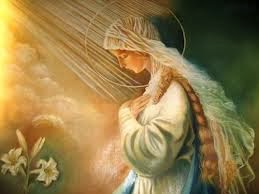
And, so now in this season of Advent, we focus on the Annunciation, Matthew 1:18-25, a mystery of epic proportions that defies rational explanation. It stuns us to hear some attempt to reduce the virgin birth to a mere story of an unwed pregnant teenager. Have we come to a time when anything that did not stand up to reason or that we couldn’t explain, should be characterized as primitive and infantile? Why do we think that an almighty spiritual being is confined to man’s intellect and his feeble language to communicate? Do we not see how metaphor and poetry reveal meaning, not explanation, on a deep personal level?

Recently we had an opportunity to travel through Eastern Europe, making our way from the Black Sea to Amsterdam. I was taken aback by the devastation in human lives caused by the failure of the “great social experiment,” that created societies whose wealth was shared but only among those at the top. So great buildings were erected for the personal aggrandizement of the elite while sacrificing the welfare of the people who were desperate for food and who desired a modicum of personal enrichment. On the other hand, I was impressed with the number of churches and cathedrals that were reopened after decades of being forced to close. These were flourishing, and while they served as much to support tourism as worship, they were a major presence.

Looking at the beautiful classical paintings and art in these churches made me wonder what it was that inspired the artists to create poetic images and visual metaphors depicting the “mysteries” of Christianity. It occurred to me that their art was spoken in a language all its own and derived its source from inspiration and not the intellect, and while the cynic might deride the image of the Angel Gabriel appearing to Mary, the artist understood it completely. Art and music are languages of the soul and bypass our rational being to speak to us at a level we cannot explain or know but do we really need explanation for something we feel down deep?

When we allow God’s love to break through into our consciousness as we contemplate the Mysteries of the Annunciation and Virgin birth, do we run from it? Do we ask it to explain what it cannot? Or are we “virgin” enough to surrender to our deepest self and allow it to fill our being? We cannot ask it to explain what it cannot.

Tuesday, December 10, 2013

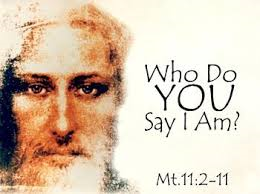
Are You The One?


This week’s account of John in  Matthew 11: 2-11 is quite a contrast to last week’s Gospel. What happened to the outspoken firebrand, the radical Messianic prophet? He attracted large crowds as he fearlessly rebuked religious leaders with his preaching. While his arrogant, self-assured confidence made us a little uncomfortable, we were eager to hear what he had to say about the Advent of the One. But this week, we see a different John, pacing his small prison cell, wondering if his ministry was all in vain and having his doubts about whether Jesus truly was the long awaited Messiah. By all accounts, Jesus was not measuring up to his expectations. Desperate for some validation, he manages to send a messenger to put the question directly to Jesus: “Are you the one?”

Rather than answer John’s question directly, Jesus cites all that he has done and dispatches the messenger:

Go and tell John what you hear and see: the blind receive their sight, the lame walk, the lepers are cleansed, the deaf hear, the dead are raised, and the poor have good news brought to them. And blessed is anyone who takes no offense at me.

Matthew gives us reason to suggest that John was aware of Jesus ministry and his works. But was he looking for something more spectacular? Were Jesus’ works a little too mundane for a Messiah? What was it that he wanted to hear from Jesus? Maybe John’s sights were set on a different kind of Messiah, one based on his concept of what a Messiah is, because he hadn’t prepared himself to see God at work His presence in the quiet things.

As a child I sang in a boys’ choir every Sunday and on Holy Days. I remember singing the beautiful Magnificat, the Canticle of Mary, in May and at Christmas time.  We sang the hymn in Latin. However, I was confused by Sister Henrietta’s translation: the haunting melody and cadence and its sweet sounding words, albeit meaningless to us, seemed to betray the theme of a humble virgin’s song of praise. It sounded more like a revolutionary battle cry:

He has cast down the mighty from their thrones, *
    and has lifted up the lowly.
He has filled the hungry with good things, *
    and the rich he has sent away empty.

Was this the powerful Messiah John was expecting? Perhaps Jesus’ answer to John says it best: What then did you go out to see? Someone dressed in soft robes? And yet, John was right, the Messiah was all about dethroning the mighty but Jesus was all about exalting the lowly, or filling the hungry. Jesus was interested in deeds and not words, Go and tell John what you hear and see. Jesus was all about repentance, a metanoia…turning the mind around. His revolution was about social change…the fruits worthy of repentance.

And so I wonder, are we any different from John? What limits have we placed on our imagination, on our expectations? Sure the beautiful Church services, with its inspirational sermons, hymns and fellowship at Christmas all serve to create a sense of God, but do we continue to carry that sense of God with us when we leave the Church and tend to our day-to-day activities in the other 167 hours of the week? Have we prepared ourselves to look for God in the ordinary people, places and things of our lives, in the ordinary nickels and dimes of our lives?

We do not come to know God by contemplating Him in secure spiritual isolation or by discussing the scripture every Wednesday night. No, God comes to us when we provide shelter for the homeless or offer a cup of water to the thirsty, in either a Waterford glass or Dixie cup. It's A Quiet Thing

Tuesday, December 3, 2013

He will baptize you with the Holy Spirit


In reading Matthew 2:1-12, I wonder if God might not have selected a better advance man for Jesus’ ministries than John the Baptist. But then, Jesus may not have had a choice; let’s face it, John was his first cousin and who knows what promises Mary made to Elizabeth when either John or Jesus had no say in the matter. Maybe the two sisters were keeping it all in the family? In any case, John was a little rough around the edges and could have used a little advice on dressing for success, or winning friends and influencing people before he began his ministry. Let me ask you; would you have hired him to be your pitch man? He rolls into town from the wilderness all decked out in camel hair and leather while munching on grasshoppers and honey. He was hardly a fashion plate or someone with whom you wanted to share a meal. He was different!

So what was it that attracted the crowd and kept them coming, not to mention line up to be baptized? While John was inspired, his demeanor and deportment may well have been studied. He dressed like the prophet Elijah, who also ate locusts and honey, the sustenance that God provided to the Hebrews as they wandered the wilderness. So when he preached the coming of the Messiah, the people may have channeled the former prophet and were eager to follow, believe and anticipate the advent of the Lord. Not everyone, however. Two groups of the “elite” Jewish hierarchy, the Pharisees and Sadducees were uncharacteristically united in their opposition to John’s prophesy. After all, weren’t they the chosen people, the direct descendants of Abraham?

Who is this wild man who comes to baptize and calls for us “to bear fruit for repentance,” the signs of a changed life? John preached the love of enemies and rejected any claim to an elite status as “the chosen” by birth. This clash between heredity, privilege and equality for all in the kingdom caused John to lash out with his customary lack of diplomacy and called the Pharisees and Sadducees “children of snakes.” John invites us to participate in God’s coming kingdom wherever we are and whatever we may be doing. All we need is enough faith in God to help us work through the ordinary and mundane elements of our lives.
And so in promising the coming of the Messiah John message is powerful but he makes certain to clearly distinguishes his subordinate role as the “one who comes before:”

I baptize you with water for repentance, but one who is more powerful than I is coming after me; I am not worthy to carry his sandals. He will baptize you with the Holy Spirit and fire. His winnowing fork is in his hand, and he will clear his threshing floor and will gather his wheat into the granary; but the chaff he will burn with unquenchable fire.


Tuesday, November 26, 2013

Be Prepared...The Son of Man is Coming


"Be not afraid... Fear not."  People have derived comfort from these words for over 2,000 years, yet we are still afraid.  What's more, we are too frightened to admit our fears, particularly the biggest fear of all - death.  The fear of death overshadows our lives.  We have - or likely have - lived longer than our parents and grandparents.  We are better fed; we lose few babies, and modern medicine protects us from contagion and disease that will lengthen our lives... and yet, we are still afraid. 

Shortly after 9/11 the words Fear Not seemed a little out of place.  Surely we had every reason to be afraid.  I am reminded of Father Mychal Judge, a Franciscan priest, who served as Chaplain to the New York Fire Dept., and was the first registered victim at Ground Zero, the sight of the former Twin Towers.  The details of his death are unclear:  some say he was fatally wounded as he administered last rites to a dying firefighter; others recall his being killed while in silent prayer.  Whatever happened, his lifeless body was discovered in the lobby and carried to a nearby church shortly before Tower I collapsed.

What does this have to do with our gospel (Matthew 24:36-44)?  Who knew how that fateful Tuesday that began with skies so blue and air so clear, would end as it did?  In many ways, Father Mychal lived this gospel.  In many ways this was a man who had arrived at Ground Zero long before 9/11.  He had proved himself ready to lay down his life many times during his career.  For him 9/11 could have occurred on any day or at any time... he was prepared.

If the thought of finding God amidst such harrowing circumstances seems strange, perhaps it is because we are out of practice looking for Him.  However, we can be certain that Christ's death and resurrection hold the deepest answer to all our fears.  Christ was executed like a common criminal and was totally forsaken by his friends.  By His overcoming death and our sharing in his resurrection, He took away all our reasons to fear forever.  Of course it does no good to recognize this on a merely intellectual level.  Knowing that Christ loves us may not save us from fear, nor will it save us from death.  And so it comes down to this:  The only way to truly overcome our fear of death is to "be prepared" and to live our life in such a way that its meaning cannot be taken away by death.  As with Father Mike, it means fighting the impulse to live for ourselves instead of others.  It means being prepared to die again and again to ourselves, and to every one of our self-serving opinions and agendas.                           
(Adapted from Johann Chrisoph Arnold, Be Not Afraid, Advent Readings, 2001)

Tuesday, November 19, 2013

Christ the King


Although his time on earth was short, Jesus created quite a stir during his even briefer ministry( Luke 23:33-43). As a revolutionary he upset Jewish law, tradition and the Roman hierarchy. He consorted with the most unlikely disenfranchised members of society and violated conventional decorum. He upset the “purity code” by proclaiming it wasn’t what went into your mouth that mattered but what came out. He wasn’t a king, a priest, or a prophet. He performed many miracles that included healing the sick and bringing the dead back to life. Yet he was unable to save himself; he was executed with 2 petty criminals. Not very kingly is it? And to compound the indignity, the soldiers kneel at his feet, not to worship, but to gamble for his clothes, while deriding his reign as “king of the Jews.” It amused them because they were Romans and they knew what a real king looked like, and this definitely was not it. A real king had power and arrogance and this Jesus had none of that. So they mocked him.

Yet, for some reason, one of the two thieves also being executed reprimands the other who derides Jesus’ weakness and speaks with compassion and takes pity on another condemned man. Then he does an astounding thing and asks “Jesus, remember me when you come into your kingdom.” Now, where did that come from?  How can he hang there on the cross and look over at a man dying beside him, and see in him as a savior, a messiah, a king with a kingdom? Somehow, the second thief got it; he saw what Jesus was doing; he saw that Jesus refused to swat his oppressors and he died so that they could be forgiven, died so that by his suffering their suffering would be healed.

We celebrate Christ the King, not because of his regal bearing, but because of his humility; not because of his power, but because of his compassion; not because of his triumph, but because of his travail; not because he fixes our lives, but because he shows us the way to live.

And what about this kingdom of God? Where is it? Richard Rohr writes that “if we go to the depths of anything, we will begin to knock upon something substantial, ‘real’ and with a timeless quality to it. We will move from the starter kit of ‘belief’ to an actual inner knowing. This is most especially true if we have ever loved deeply; accompanied someone through the mystery of dying, or stood in genuine life changing awe before mystery time or beauty. This ‘something real’ is what all the worlds religions were pointing to when they spoke of heaven or the kingdom of God. They were not wrong at all; their only mistake was that they pushed it off into the next world. If God’s Kingdom is later, it is because it is first of all now…In other words, heaven/ /union/ love now emerge from within us much more than from a mere belief system and  as Jesus promises the Samaritan woman, “the spring within her will well up into eternal life. (John 4:14)”

Tuesday, November 12, 2013

Love is Here to Stay


The more I read the papers, the less I comprehend.
The world and all its capers and how it all will end.
Nothing seems to be lasting, but that isn’t our affair.
We’ve got something permanent,
I mean in the way we care.
 
… and so did Ira Gershwin pen this beautiful preface to his brother George’s melody. Somehow these words seem to connect me to our reading in Luke 21:5-19. Ira Gershwin wrote the lyrics to Love is Here to Stay as a loving tribute to his brother who had recently died at 39. The song speaks of love’s permanence in an ever changing world. Ira would have no way of knowing how prophetic his words written in 1938 were, as we witness the passing of what we thought would be indestructible icons that turned out to be passing fancies of sorts.

A few months ago I had the chance to visit the high school from which I graduated. I had attended this newer more “modern” building for the last 6 months of high school, since my school had to be torn down. At the time of my visit I passed by my childhood home and paused to take it all in. Only the front door remained the same. I did not nor did I expect to recognize anyone, although I could recreate people and places by super imposing my memory on the scene. Not unlike those who resisted Jesus’ prediction that the temple would one day be destroyed, I too thought these icons of my youth would last forever. Yes, there is an ache that comes from seeing so much of what I thought would be always, be no longer, but the older we get the more we know that nothing temporal by its very definition is eternal.

Jesus prophetically speaks of unsettling things that we like to think are just spiritual metaphors. But the current devastation from the Typhoon in the Philippines and the civil war in Syria are terrible reminders that the things we hold so close are just passing fancies and in time will go.  Even if these words don't resonate for us today, the time will come when they just might.  And then, as now, Jesus’ promise remains “I will give you words and a wisdom that none of your opponents will be able to withstand or contradict.”  God is watching out for us and His love is here to stay.

Tuesday, November 5, 2013

Resurrection and Everlasting Life


I don’t think the Sadducees really cared about Jesus’ opinion on resurrection (Luke 20:27-38). Not unlike news reporters who ask leading questions to which they already know the answer, the Sadducees tried to embarrass Jesus by having him say something that “contradicts” the law. Yet, motive aside, was their question really unreasonable?  The Sadducees saw the whole person as mortal and did not believe in "resurrection.” They attempted to use the Jewish law on women, marriage and procreation to trap him. Of course in all cultures marriage and procreation are crucial to maintaining stability and preserving survival and Jesus is really not rejecting or taking a stand on the importance of marriage. However, he is telling the Sadducees that marriage is irrelevant and procreation is unnecessary in life eternal.

 Much of our belief on Christ’s resurrection on the “third day” comes from the way in which the Church interpreted the Creed throughout the centuries. David Steindl-Rast writes that “Jesus’ resurrection has nothing to do with coming back to life (like Lazarus in John’s Gospel). The Creed does not talk about any coming back; resurrection is a sacred movement of completion. It’s a new beginning into a new level of life in which the power of love breaks the bonds of death. The followers of Jesus experienced the resurrection of Jesus Christ as a life-changing conviction.”

The Sadducees used the laws of Moses to trap Jesus on resurrection. However, Moses was dealing in a time and place during which a man was responsible for the preservation of his lineage and his family by marrying his deceased brother's wife (Deuteronomy 25:5-10). Jesus stance on earthly convention had nothing to do with the earthly laws of Moses which do not apply in heaven. We are confined to understanding that which we are capable based on our human intellect. God s not bound to our human understanding or to our dimension. God is about something more.

“For many of us mystery became an adversary; unknowing became a weakness. The contemplative spiritual life is an ongoing reversal of this adjustment. It is a slow and sometimes painful process of becoming ‘little children’ again in which we first make friends with mystery and finally fall in love again with it again.”  (Gerald May, Dark Night of the Soul).